
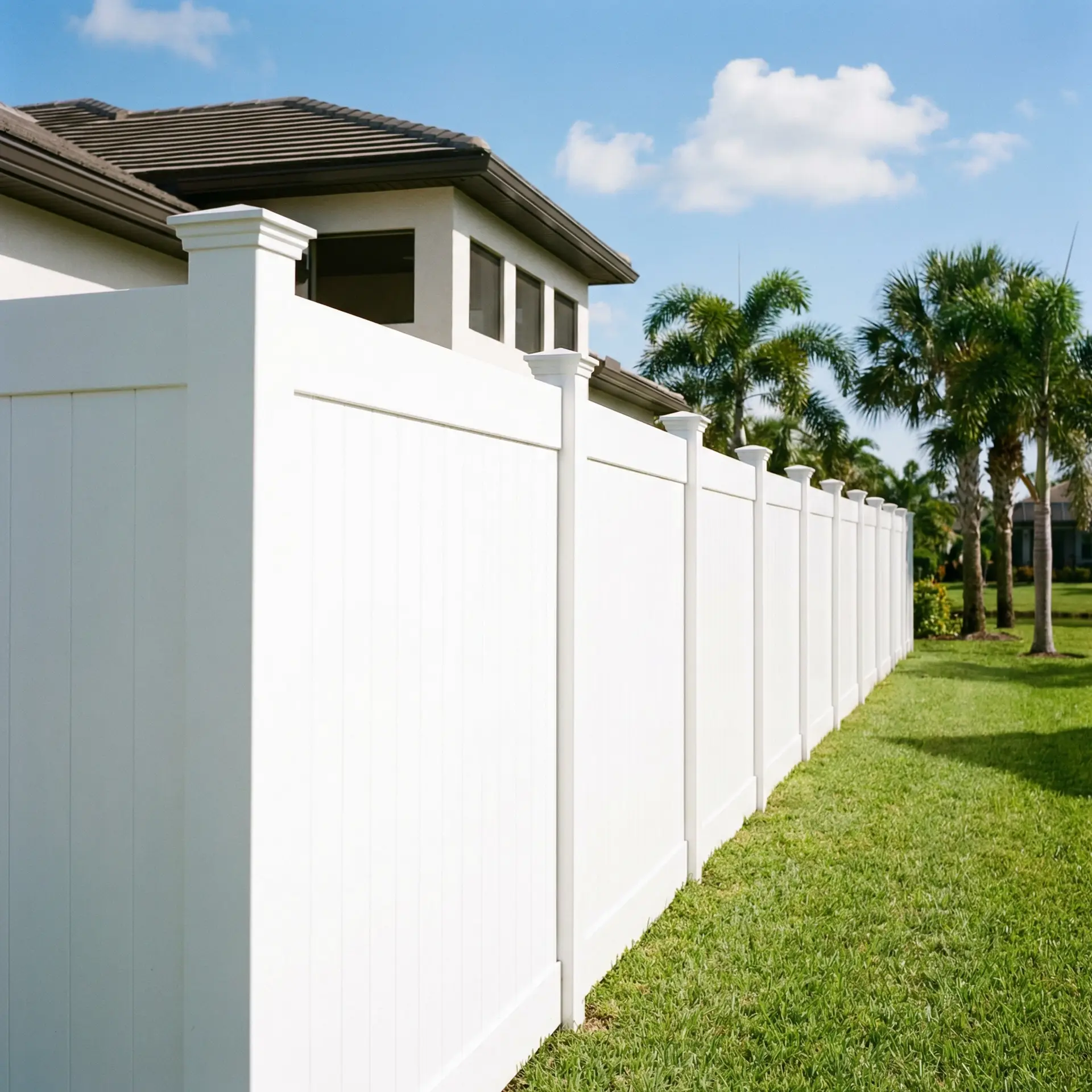
Get Your Fence Ready for Hurricane Season
Hurricane season runs June through November, and in Miami-Dade — the heart of Florida's High Velocity Hurricane Zone — your fence is one of the first things the wind tests. Here's exactly what to check and fix before the first named storm.
Updated June 2026 · By the MCM Fence team · Serving Miami-Dade & South Florida
Why Miami-Dade Fences Need a Pre-Season Check
This county sits in the most demanding wind zone in the country. Miami-Dade and Broward form Florida’s High Velocity Hurricane Zone (HVHZ) — the building-code region created after Hurricane Andrew leveled South Miami-Dade in 1992. Homes here are engineered against 175 mph ultimate design winds. Your fence lives in that same wind, but unlike your roof, it usually gets zero attention until it’s lying in the yard.
Storm season is June through November, and the math favors acting early. A typical fence repair in Miami runs a few hundred dollars. The same weak point left for a tropical storm to find becomes a multi-panel replacement, often four figures, scheduled behind every other storm-damage call in the county. The entire point of this guide is to move you to the cheap side of that equation.
The 15-Minute Pre-Season Fence Inspection
Walk your fence line once, slowly, and check these five things:
- Leaning or wobbly posts. Grab each post and push. Movement means the footing has failed or is failing — wind cycles work posts loose season after season, and much of Miami-Dade sits on hard oolitic limestone where a post that wasn’t set correctly never really had a grip. This is the single most important item on the list.
- Loose, cracked, or rattling panels. Panels that move in a breeze become sails in a storm. On wood fences, look for boards pulling away from rails; on vinyl, check that panels are seated in their rails and that no caps are missing.
- Rot and rust at ground level. Wood posts rot where they meet the ground; steel hardware corrodes fastest near the coast, where salt air attacks hinges, latches, brackets, and fasteners long before the fence itself fails.
- Gate hardware. Open and close every gate. A gate that sags, binds, or doesn’t latch is the part of the fence most likely to be destroyed by wind — an unlatched gate slams itself to pieces. Pool gates must self-close and self-latch, every time, per Florida’s pool barrier law.
- Trees and projectiles. Branches over the fence line and loose yard items (planters, furniture, trampolines) become the debris that cracks panels. Trim and plan now.
If any of those checks fail, a fence repair now is the cheapest insurance you’ll buy this season.
What Actually Survives: Materials in the HVHZ
Wood is the most vulnerable. Pressure-treated wood fencing handles normal South Florida weather fine, but it’s the first casualty of a real storm — wood fences typically need replacement after a Category 2 or stronger hit. If your wood fence is already aging, consider whether this is the year to replace it with something stronger.
Vinyl performs better — if it’s the right vinyl. Standard big-box vinyl flexes in wind but cracks under debris impact. HVHZ-grade vinyl systems are a different product class: thicker profiles, reinforced posts, and documentation through Miami-Dade NOA or Florida Product Approval — the same approval vocabulary you know from impact windows. That’s the class of vinyl system we install.
Aluminum sheds wind by design. Open picket spacing lets the wind pass through instead of pushing against a solid wall, and powder-coated aluminum shrugs off the salt air that destroys steel hardware. It’s the quiet overachiever of coastal fencing.
Dura Fence is the storm-resilience flagship. A proprietary heavy-gauge galvanized steel system engineered specifically for the lateral wind loads hurricanes throw at South Florida — built for the market that created the HVHZ. MCM Fence is an authorized Dura Fence installer, and for homeowners who never want to do post-storm fence cleanup again, it’s the conversation to have before the season, not after.
The Two Construction Details That Decide Everything
Posts: depth and concrete. A fence survives at its posts or fails at them. That means posts set deep, in properly mixed concrete — not the “dry-pour” shortcut where bagged concrete is dumped in the hole dry. Dry-poured posts routinely fail within a few storm seasons. It also means respecting Miami-Dade’s ground: hard oolitic limestone is tough to dig and unforgiving of shortcuts.
Hardware: stainless or hot-dipped galvanized. Near the coast, the fence often outlives its own hinges and latches. Salt and humidity eat bargain zinc hardware in a couple of summers. Specifying corrosion-resistant hardware is a small line item that decides whether your gate still latches in October.
Don’t Forget the Pool Barrier
Florida Statute 515 — the Residential Swimming Pool Safety Act — requires pool barriers at least 4 feet high, with no gaps a young child could crawl under or squeeze through, and gates that open outward, self-close, and self-latch. A pool fence weakened by previous seasons isn’t just a repair item: it’s a compliance and child-safety gap that storm season will widen. If your pool barrier failed any part of the 15-minute inspection, treat it as the first call, not the last.
The Bottom Line
Hurricane prep for fencing is unglamorous: reset the leaning posts, fix the gates, replace the corroded hardware, and know which material you’re betting on before the wind places its own bet. Every item on this list is cheaper in June than in September — and dramatically cheaper than after a named storm finds the weak point for you.
Based in West Kendall, serving all of Miami-Dade and nearby Broward. Schedule a free pre-season assessment or call (786) 209-9966 — we’ll walk your fence line and give you the honest list.
Hurricane Fence Prep FAQ
Fix It Before the Storm Tests It
Licensed, insured, and based in West Kendall — free on-site estimates across Miami-Dade and South Florida.